Akpamyk — the Ashgabat plant that turns cotton waste into medical wadding
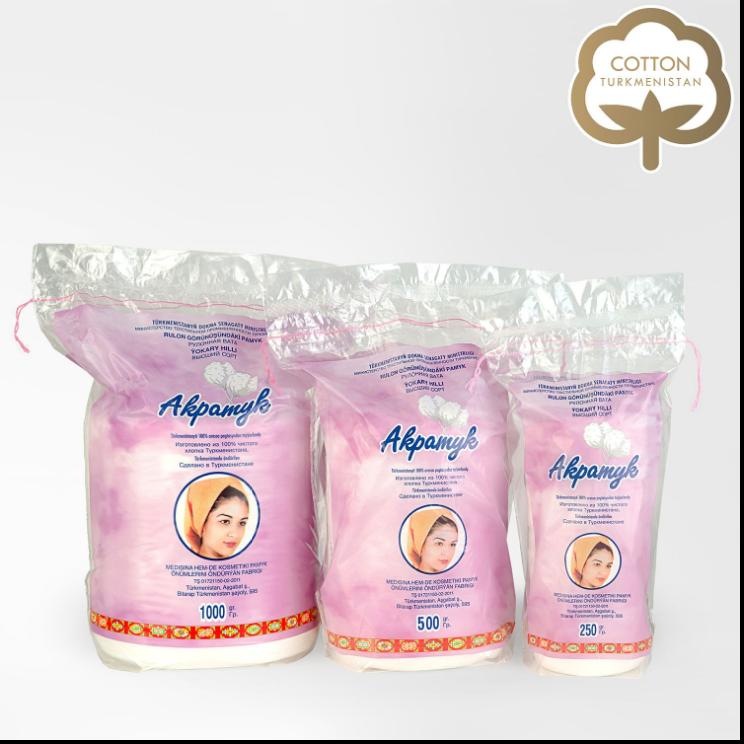
Akpamyk is the brand on almost every packet of cotton wool, cotton buds and cosmetic pads sold in Turkmenistan, and it comes from a single plant on Bitarap Türkmenistan Avenue in Ashgabat. What makes it interesting to a foreign buyer is not the products themselves — these are commodity items made everywhere — but what it runs on. The factory was built to turn the cotton waste of Turkmenistan’s own spinning mills into medical-grade wadding. This is how it works and what it can supply.
A plant built to close a loop
The Ashgabat factory for the production of medical wadding and cosmetic cotton products was built under a presidential decree issued on 17 December 2017, and the project was carried out by the Ministry of Textile Industry together with Kotam Enterprises Ltd of Türkiye. It sits at Bitarap Türkmenistan Avenue 595, in the city rather than in an industrial zone, which tells you something about the scale — this is a finishing plant, not a heavy mill.
Its position in the sector is unusual. Every other enterprise in the ministry’s network spins, weaves or sews. This one consumes what those enterprises throw away.
The raw material is other factories’ waste
The feedstock is purified fibrous waste from the spinning mills of the Ministry of Textile Industry. Comber noil, card fly and the short fibre that cannot be spun into yarn are collected, cleaned, bleached and rebuilt into wadding. The plant processes up to 4,800 tonnes of refined fibre cotton waste a year.
That matters commercially in two ways. It means the input cost is structurally low, because the material has already been paid for once as cotton and written off as waste. And it means supply is tied to the output of the spinning sector rather than to the cotton harvest directly — if the mills are running, the feedstock exists.
It also explains the quality ceiling. Wadding made from recovered short fibre is exactly right for medical cotton wool, cosmetic pads and bud tips. It is not the material for spinning fine yarn, and nobody claims otherwise. If you need long-staple fibre, that comes from the spinning mills instead.
Capacity
The plant is rated at 4,200 tonnes of medical cotton and 12.4 million pieces of cosmetic cotton products a year — the second figure covering cotton buds, cosmetic pads and make-up remover tampons together.
For the bud line specifically the producer states a monthly capacity of 1,033,000 packs and a minimum order of 10,000 packs. That is a realistic entry point: a trial container rather than a year’s offtake.
What it makes
Cotton buds
Cotton buds in the standard 100-piece screw-top tub, marked 100% cotton and carrying the Cotton Turkmenistan mark. This is the plant’s most retail-ready product and the one with a stated export minimum. The category page holds the specification.
Cosmetic cotton pads
Cosmetic cotton pads in 100-piece drawstring sleeves, quilted, graded ýokary hilli — highest grade. Round pads are the standard format; the make-up remover tampons counted in the plant’s cosmetic total are a separate item worth asking about if you are building a full range. See the cosmetic cotton pads category.
Medical cotton wool
Medical cotton wool in flat 100 g and 200 g packs, made from 100% Turkmen cotton. This is the volume product against the 4,200-tonne figure and the one most likely to interest a pharmacy distributor or a hospital supply tender. The medical cotton wool category carries the detail.
Roll wadding
Cotton wool in roll form in 250 g, 500 g and 1000 g bags, also graded highest grade and produced to a Turkmen technical standard printed on the pack. Rolled wadding is the format clinics and dressing-pack assemblers buy; a second listing for cotton wool sits alongside it, and the roll category covers both.
Bleached cotton fibre
Bleached cotton — the cleaned, whitened fibre itself, sold as an input rather than a finished good. If you convert your own wadding or make your own pads, this is the line to ask about, and it is the one product here that a manufacturer rather than a distributor would buy.
Standards and marks
Packs carry a Turkmen technical standard (TŞ) number, the highest-grade designation where it applies, and the Cotton Turkmenistan origin mark. The ministry’s enterprises work to Turkmenstandartlary certification, and the textile sector more broadly holds ISO and OEKO-TEX registrations, but medical-device or pharmacopoeia certification is a separate question and you should ask for it explicitly. If your market requires EP or USP absorbent cotton compliance, or CE marking for a medical device, get the current certificates in writing before you plan a shipment. We will ask on your behalf rather than guess.
Buying terms
The producer quotes EXW, FCA, FOB, CIP and CIF, settles in manat, dollars or euros, and works on SWIFT transfer. That range of Incoterms is broader than most Turkmen state producers offer and suggests a plant used to dealing with foreign buyers directly.
As a ministry enterprise its export contracts go through the State Commodity and Raw Materials Exchange; our guide to how to buy from Turkmenistan sets out what registration involves.
Sourcing from the Ashgabat cotton products factory
The full range sits on the producer’s page in our catalogue.
Tell us the product, the pack size, the annual volume and the destination, and we will come back with what the plant can commit to, which certificates exist today, what packing and pallet configuration to expect, and whether private-label printing is possible on the sleeve or tub. For pharmacy and hospital buyers we will ask specifically about grade documentation; for retail programmes, about carton counts and shelf-ready packing.
We can buy on your behalf so you never deal with the exchange directly, or register you in your own name and take your file through financial monitoring, the broker appointment and contract registration.