State Concern Turkmennebit — the oil industry of Turkmenistan
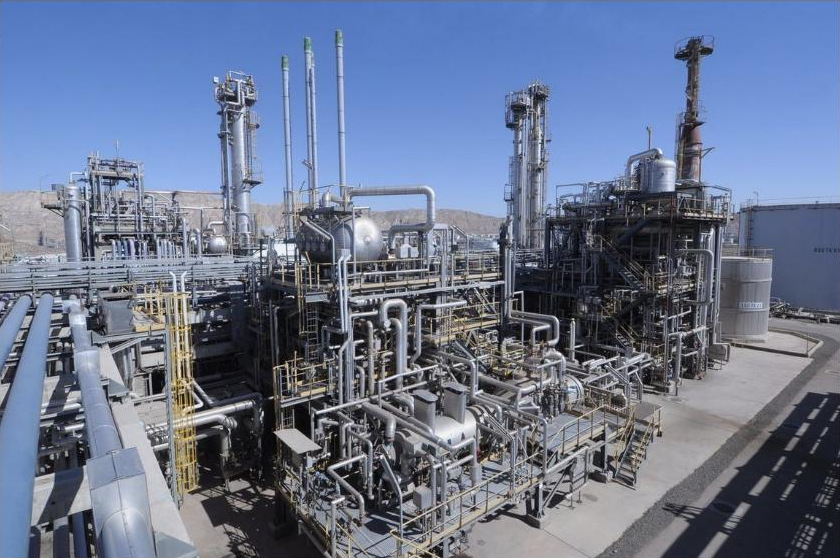
State Concern “Turkmennebit” is the oil half of Turkmenistan’s energy industry — the gas belongs to Türkmengaz. It drills the wells, lifts the crude, runs both refineries, and puts the fuel into the country’s filling stations. Two refineries sit at the centre of it: the Turkmenbashi complex on the Caspian, and Seydi on the Amu Darya. Almost every barrel of Turkmen refined product that reaches an export buyer comes out of one of them. This is how the concern is put together, and what it actually sells.
The shape of the concern
Turkmennebit is organised in three layers, and knowing which one you are dealing with saves a great deal of time.
Upstream is a set of trusts that find the oil and produce it. Refining is the two plants. Distribution is a separate directorate that supplies the domestic market only. A foreign buyer never deals with the third layer, occasionally deals with the first, and almost always wants the second.
As with the rest of the state sector, the sales channel is the exchange rather than the plant gate. Our guide to how to buy from Turkmenistan through the State Commodity Exchange covers what registration involves.
Upstream: where the crude comes from
Nebitgazchykarysh Trust
The production arm, headquartered at Balkanabat and re-established in its present form in 2017. It handles crude extraction, natural and associated gas, gas condensate, and the treatment and delivery of all three. Underneath it sit eight named oil and gas production departments — Galkynyshnebit, Yashyldepe, Nebitdagnebit, Goturdepenebit, Gumdagnebit, Gamyshlyjanebit, Keymir and the Korpeje gas department — along with the main oil pipeline directorate and the gas gathering and compression directorate. The names matter to a buyer, because the crude slate at each refinery is described by field, and Yashyldepe in particular turns up in Seydi’s feedstock.
Nebitgazburavlayysh and Nebitgazduypliabatlayysh
The drilling trust and the well-intervention trust. Neither sells anything a commodity buyer wants, but both appear constantly in Turkmennebit’s tender notices, which is where oilfield service and equipment suppliers should be looking rather than at the product catalogue.
Hazarnebit and Turkmennebitgeofizika
The Caspian offshore enterprise and the geophysics administration. Again, service-side rather than product-side, but they define where the next production is coming from.
Turkmenbashi oil processing complex
The larger of the two refineries and the source of most of what this catalogue lists. It was built in 1943, during the war, on equipment evacuated from the Tuapse refinery on the Black Sea, and it has been rebuilt in stages ever since. It is now among the largest industrial enterprises in the country.
The complex is not only the Turkmenbashi plant. Its structure also takes in the Seydi refinery, the Kenar oil storage and loading enterprise, the Turkmennebitonumleri distribution directorate and the Balkannebitgazgurlushyk construction trust — which is why “Turkmenbashi complex” and “Turkmennebit refining” are often used to mean the same thing.
On the process side it runs primary distillation (ELOU-AVT) alongside a full secondary set: catalytic cracking, catalytic reforming, jet fuel treating, diesel hydrotreating, olefin alkylation and light gasoline isomerisation, plus dedicated units for bitumen, petroleum coke and calcined coke, and a polypropylene shop with its own bag production. A gas turbine unit, desalination, boiler house, cooling towers, tank farms and substations support the lot.
The licensor list is the useful part for anyone assessing quality: UOP (Honeywell), Axens, Basell Polyolefins, DuPont–Stratco, Chiyoda, Technip, JGC Corporation, LG International and Hyundai Engineering. This is not improvised plant. Refinery profile.
What comes off it, in the terms a buyer will recognise: jet fuel TS-1 and Jet A-1, the motor fuel range from A-80 through ECO-93, ECO-5 ultra-low-sulphur diesel and the older L-0.2-62 grade, fuel oil M-100 and low-sulphur fuel oil, the base oil and lubricant range, green petroleum coke and calcined coke, slack wax, liquefied gas, and the polypropylene that feeds the bag and film lines.
Seydi oil refinery
The second refinery, and a very different animal. It was designed in the late 1960s as the Charjev refinery, approved by Moscow in February 1970, and commissioned in November 1989 — on the left bank of the Amu Darya, some eighty kilometres from Turkmenabat. In 2005 it was formally folded into the Turkmenbashi complex.
The design assumption is the thing worth knowing: Seydi was built to run West Siberian crude. After independence that supply ended, and the plant was turned over to Turkmen oil and gas condensate from Yashyldepe, Gazojak and other domestic fields. A refinery running a feed it was not configured for behaves differently from one that is, and it shows in the product slate.
Three main units: the ELOU-AVT-6 primary distillation and desalting train, rated at 6 million tonnes a year, producing fuel oil M-100, L-0.2-62 diesel and straight-run gasoline; catalytic reforming, where LCh-35-11/1000 came online in 1992 and the 500,000 tonne-a-year LCh-35-11/500 was rebuilt and restarted in 2017, yielding A-80, A-92 and A-95 gasolines plus extraction gasoline and liquefied gas; and a road bitumen plant rated at 37,200 tonnes a year, which also produces heavy and light vacuum gasoil. A nitrogen and oxygen plant, running since 1990, supplies the site. Refinery profile.
Turkmennebitonumleri — the part you cannot buy from
The Main Directorate “Turkmennebitonumleri” runs the oil bases and the filling-station network, with around thirty petroleum-products enterprises spread across every province — Anew, Bäherden, Gökdepe, Kaka, Tejen, Sarahs, Balkanabat, Gyzylarbat, Kenar, Ekerem, Dashoguz, Köneürgench, Bayramaly, Yolöten, Serhetabat, Türkmenabat, Kerki, Köýtendag and the rest.
It takes product from both refineries, plus imports, and sells it on the domestic market. It is not an export channel, and enquiries sent there about export volumes go nowhere. Buyers occasionally find this directorate first because it is the most visible part of the concern inside Turkmenistan, and lose weeks to it.
What actually reaches the export market
Turkmennebit is by a wide margin the largest seller on the State Commodity Exchange. Reading its lots over the last four years — roughly two and a half thousand of them, more than half for export — gives a much more accurate picture of availability than any refinery capacity figure.
Fuel oil moves the most tonnage. It trades in large cargoes, and its destinations are different from everything else the concern sells: the UAE first, then Malta — a Mediterranean bunkering and trading hub that appears nowhere else in the Turkmen export record. Diesel and jet fuel TS-1 follow, both in seven-figure tonnages, going principally to Afghanistan, the UAE and Uzbekistan. Liquefied gas is close behind and goes overwhelmingly to Afghanistan. Gasoline, base oils and petroleum coke trade steadily in smaller volumes.
Bitumen is the outlier. It has more lots than any other product by some distance, but the overwhelming majority are domestic — Turkmenistan is building roads with it. The export share is small, and a buyer who assumes the lot count reflects export availability will be disappointed. Polypropylene behaves the same way: heavily traded, mostly domestically, with Afghanistan and Türkiye taking the exported share.
Most export lots are formula-priced, not fixed-priced
This is the single most useful thing in the record. Around three-quarters of Turkmennebit’s export lots are listed against a Platts formula rather than a fixed figure — a named Platts quotation, a discount, and usually a floor below which the seller will not go. Fuel oil and jet cargoes to the Mediterranean, for instance, are written against FOB Italy assessments.
For a buyer this changes how you prepare. You are not bidding a number; you are accepting a mechanism, and the negotiable parts are the differential, the floor and the quotation period. If you are used to fixed-price tenders, budget for the fact that your final invoice is not knowable on the day of the trade.
Sourcing from Turkmennebit
We cover the full refined slate — motor fuels, fuel oil and marine fuels, base oils and lubricants, bitumen, coke and waxes, LPG and industrial gases and polymers and films — with the producer’s own specification table on each page.
Tell us the product, the tonnage and the destination, and we will come back with which refinery it comes from, whether it has actually been trading in export lots or only domestically, what loading terms to expect at Kenar or by rail, and whether the lot is likely to be formula-priced. Where a product trades mostly on the domestic market we will say so rather than let you build a plan around it.
We can buy on your behalf so you never deal with the exchange directly, or register you in your own name and walk your file through financial monitoring, the broker appointment and contract registration — the better route if you intend to be a regular buyer.