Turkmenabat chemical plant — Turkmenistan’s only phosphate producer
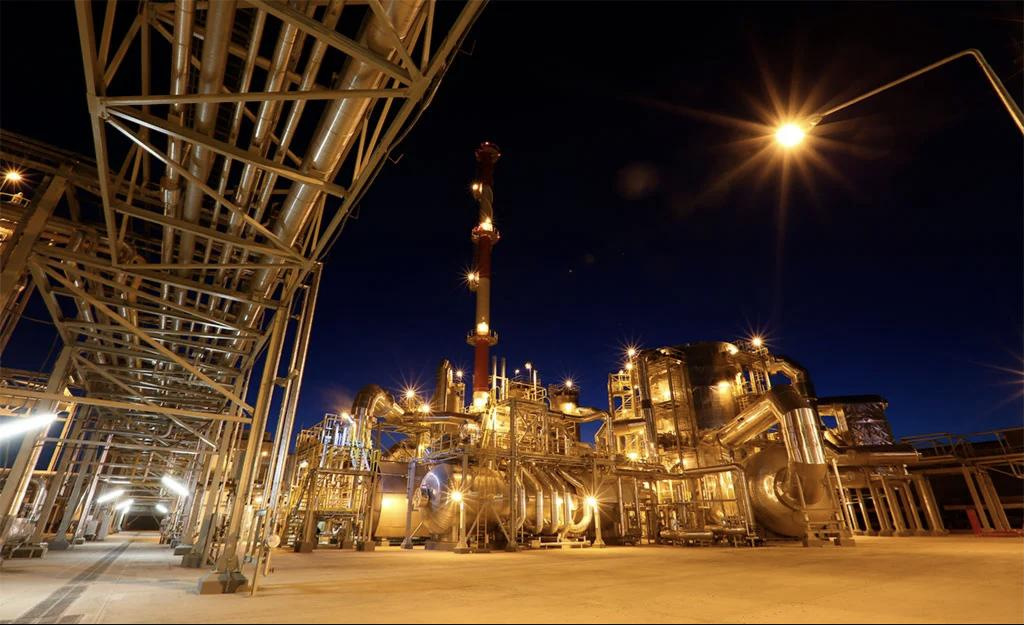
The Turkmenabat chemical plant named after S.A. Niyazov is the only phosphate fertilizer producer in Turkmenistan. It has been running since 1960, it makes rather more than fertilizer, and its main product — granular ammonium superphosphate — was invented on site to get the plant off imported phosphate rock. This is what it produces, to what specification, and what a foreign buyer can realistically obtain.
Why the plant exists
Turkmenabat was built in 1960 to supply Central Asia with mineral fertilizer, and phosphate is what cotton and grain need. It remains the country’s only phosphate fertilizer plant, which means there is no second source inside Turkmenistan for anything on its list.
The plant belongs to State Concern Turkmenhimiya. For the wider structure — the urea plants, Garlyk potash, the Caspian brine works and how they sell — see our guide to the chemical industry of Turkmenistan. Plant profile.
Sixty years of additions
The plant’s capability is best understood as a series of workshops bolted on over six decades.
Sulfuric acid came first, in 1960. Simple superphosphate followed in April 1961 at 247,000 tonnes a year. An oxygen unit was added in 1966 to supply industrial and medically pure oxygen, and ammoniated superphosphate at 350,000 tonnes a year in 1967. A polyethylene goods workshop opened in 1971. In 1980 came ammophos at 157,900 tonnes a year together with extraction phosphoric acid; in 1987 that ammophos line was converted to ammonium phosphate.
After independence the plant kept developing its own processes: ammonium sulphate in 1994, organic fertilizers in 1999, and a route to fertilizer ameliorant made from the phosphogypsum the plant itself generates.
The decisive change was 1997. Phosphate rock had to be imported, and the plant’s engineers developed a production route to ammonium superphosphate that cut the dependency. That product has been the plant’s main output ever since. A newer granular version carries sulfur alongside the phosphate and nitrogen.
Most recently, a second sulfuric acid workshop rated at 500,000 tonnes a year came online in 2016 — which is why sulfuric acid now appears as a traded product in its own right rather than only as an internal intermediate.
Ammonium superphosphate — the main product
Granular ammonium superphosphate is a complex, prolonged-action fertilizer built on phosphates and ammonium sulphates, supplying phosphorus and nitrogen together. It is made to specification TŞ 00203743-8-2003.
The headline figures: assimilable phosphate (P₂O₅) not less than 10±1%, of which water-soluble phosphates are at least 60%; total nitrogen 9±1%; moisture not more than 2.0%. Granulometry is 90% in the 1–4 mm band with no more than 5% below 1 mm, static granule strength at least 3 MPa, and friability 100%. The product is grey and granular.
It ships in four- or six-layer paper bags, or open polyethylene or polypropylene bags, at 40±1 or 50±1 kg net, and carries hazard class 9 marking.
The rest of the range
Technical sulfuric acid to TDS 2184-77, contact grade, at 92.5–94.0% monohydrate — and by agreement the plant will supply enhanced and industrial grades up to 98%. It moves in acid-resistant rail tanks, steel containers and barrels, or by acid pipeline to a neighbouring consumer.
Fertilizer ameliorant is the interesting one. It is made by processing the plant’s own phosphogypsum, and it is used to bring solonetzic — saline-alkali — soils back into production, with a reclaiming effect as well as a nutrient one. It runs at least 80% calcium sulphate dihydrate with 4±1% assimilable phosphate and 1–2% ammonia nitrogen. If you are dealing with degraded irrigated land, this is a more relevant product than the fertilizer.
Oxyhumate and aluminium sulphate, the latter as a water-treatment coagulant, complete the chemical list.
Gaseous oxygen to TDS 781-2016 comes in industrial grade at 99.7% minimum and medical grade at 99.5%, the medical product carrying its own state registration.
Polymer goods include non-pressure polyethylene pipe in 25 to 100 mm outside diameters, for sewage, ventilation and cable ducting, plus film.
What actually reaches export buyers
Here we would rather be useful than flattering.
Across four years of State Commodity Exchange records, the only Turkmenabat product we see trading is sulfuric acid — a handful of lots, with the exported ones going to Türkiye. Ammonium superphosphate, fertilizer ameliorant, oxyhumate, aluminium sulphate and oxygen do not appear in the export record at all.
The most likely explanation is straightforward: Turkmenistan grows a great deal of cotton, phosphate fertilizer is what cotton needs, and the country’s only phosphate plant is absorbed by domestic agriculture. That is not a failing — it is what the plant was built for.
What it means for you is that a listing in a catalogue is not the same as an available export lot. If ammonium superphosphate is what you need, ask us before you build a plan around it, and we will tell you what is actually moving rather than what is theoretically produced. Sulfuric acid is a different matter, and worth a conversation.
Our guide to how to buy from Turkmenistan explains why state producers sell through the exchange and what that means for a first-time buyer.
Sourcing from Turkmenabat
The plant’s output sits in our chemicals and fertilisers catalogue, each page carrying the producer’s own specification table.
Tell us the product, the grade, the tonnage and the destination, and we will come back with whether it has been trading, what packing and loading terms apply, and — where the answer is that it has not been exported recently — what the realistic alternatives are, including producers outside Turkmenistan where that serves you better.
We can buy on your behalf so you never deal with the exchange directly, or register you in your own name and take your file through financial monitoring, the broker appointment and contract registration.