Licorice from Turkmenistan — the Buýan complex, the products and the export trade
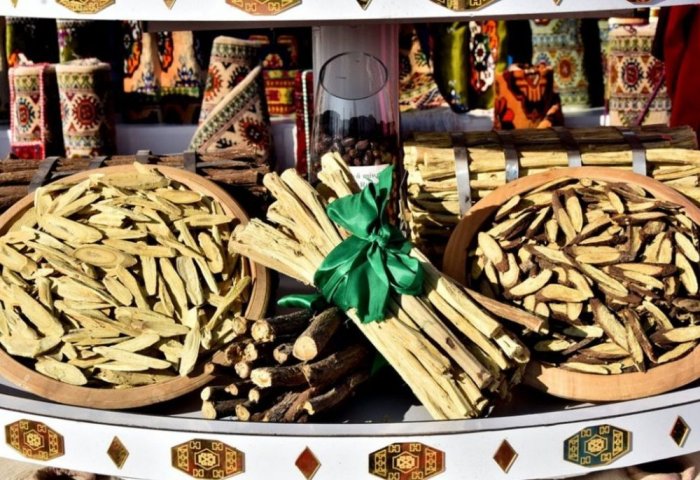
Licorice is one of the few things Turkmenistan supplies to the world market from a genuinely wild resource. Glycyrrhiza glabra grows along the Amyderya in the east of the country, and the roots have been dug, dried and exported from Lebap for decades. Today the trade runs from raw root through to purified glycyrrhizic acid, and almost all of it passes through one enterprise.
The producer
The Buýan Agro-Industrial Complex named after S.A. Niyazov is a state enterprise founded in 1995, based at Mahtumkuli street 25, Türkmenabat, in Lebap province. It sits under the Türkmendermansenagat association of the Ministry of Health and Medical Industry, and it collects, processes and exports the country’s licorice.
Harvesting is a field operation, not a plantation one. Root is dug by teams working across Lebap from Koytendag in the south to Darganata in the north. In 2020 the complex reported 17,500 tonnes of raw root for the season, yielding 7,000 tonnes dry; current output is reported at about 19,000 tonnes of raw material a year.
The product ladder
- Unpeeled dried root and rhizome — whole, cut or crushed. The volume line, and what most first-time buyers start with.
- Thick (fluid) extract — produced in the complex’s own workshop.
- Dry extract — powder, the form most food and pharmaceutical buyers specify.
- Crude glycyrrhizic acid — the newest step up the ladder.
- Finished consumer goods — licorice root syrup and licorice herbal teas, made for the domestic market and exported in small volumes.
Assay varies by batch and by grade, so specify the glycyrrhizin content you need when you enquire rather than assuming a standard figure.
The glycyrrhizic acid plant
A dedicated plant in the second industrial zone of Türkmenabat now produces crude glycyrrhizic acid, taking 4,500 tonnes of raw material a year and yielding up to 390 tonnes of finished acid. Output is packed in 25 kg moisture-resistant bags, with quality control laboratories equipped from Japan, Germany and Italy. It is the most significant change in this industry in years: it moves Turkmenistan from selling a raw agricultural commodity to selling a purified active ingredient.
Where it goes
The producer lists its export markets as China, Russia, the United States, France, the United Kingdom, India, Serbia, the UAE and South Korea. The recorded exchange trade from 2022 to 2026 is more concentrated than that list suggests:
| Product | Deals | Volume | Main buyers |
|---|---|---|---|
| Unpeeled dried root and rhizome | 26 | 22,526 t | Serbia, UAE, China, Türkiye, Hong Kong |
| Dry licorice extract | 18 | 2,686 t | Serbia, UAE |
| Thick licorice extract | 30+ | 2,900+ t | Serbia, India, Pakistan, UAE, Türkiye, Germany |
Serbia is the single largest recorded destination, ahead of the UAE, with Türkiye, Germany, China, Hong Kong, India and Pakistan behind them. European and North American extractors are the end-users further down the chain, buying either directly or through traders.
How it is sold
Licorice is sold through the State Commodity and Raw Materials Exchange of Turkmenistan, in lots. The producer’s own export listing sets a minimum order of 21–22 tonnes on FCA terms — roughly a full truck or container — for root, liquid extract and extract powder alike. Alongside the Ministry’s own lots, several private Turkmen processors also offer thick extract on the exchange, which is where smaller and more flexible parcels tend to come from.
Sourcing licorice from Turkmenistan
We work directly with the producers. Tell us the form you need — root, thick extract, dry extract or glycyrrhizic acid — along with the glycyrrhizin content, volume, destination and preferred incoterm, and we will come back with a formal offer.
Product pages: Licorice root · Dry extract · Liquid extract · Root extract · Crude glycyrrhizic acid · Licorice syrup · Health & personal care